Freedom Is the Trap: How Limitless Choice Quietly Strangles Your Sandbox Campaign
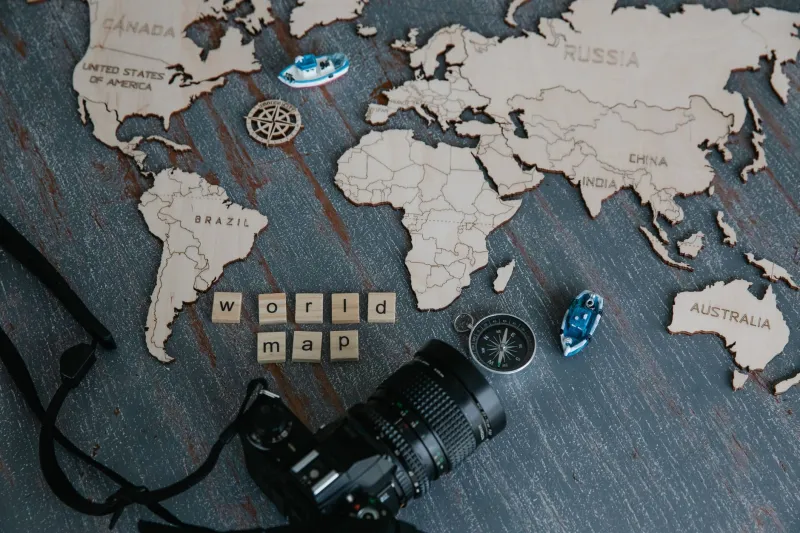
There's a moment every GM who's run a sandbox campaign knows intimately. You've spent weeks building a world — factions with competing agendas, dungeons scattered across a continent, political intrigue simmering in three separate cities. You sit down at the table, gesture broadly at all of it, and say something like, "You can go anywhere. Do anything. The world is yours."
And then your players stare at each other for forty-five minutes.
This isn't a failure of imagination on their part. It's a design problem on yours — and honestly, on the entire philosophy that more freedom automatically equals better play. The gaming community has spent years celebrating the open-world sandbox as the gold standard of collaborative storytelling, but there's a quiet truth that doesn't get discussed enough: too much agency doesn't liberate players. It paralyzes them.
The Paradox Nobody Talks About
Psychologists have a name for what happens when humans face too many options. Barry Schwartz called it the Paradox of Choice — the idea that expanding options beyond a certain threshold doesn't increase satisfaction, it tanks it. Decision fatigue sets in. The fear of making the "wrong" choice outweighs the excitement of making any choice at all.
Tabletop RPGs aren't immune to this. When a player looks at an open map and sees a dozen equally valid directions, their brain doesn't light up with possibility. It starts running worst-case scenarios. What if we go north and miss something critical in the south? What if there's a recommended level range we're ignoring? What if the GM has seeded one of these locations with the "real" story and we wander off into filler content for three sessions?
That last fear is particularly corrosive, because it means your players are second-guessing your sandbox even while you're trying to celebrate it.
The Illusion of Freedom vs. the Architecture of Choice
Here's the thing — the most beloved open-world experiences in gaming history aren't actually unlimited. They're carefully constrained in ways that feel invisible.
Think about how classic adventure modules work. Even the ones that feel expansive are quietly funneling players through a sequence of meaningful decisions. You don't choose between forty-seven options; you choose between three, each with distinct flavor and consequence. The world feels big because the choices feel real, not because the menu is endless.
The best sandbox GMs aren't the ones who prep the most content. They're the ones who architect the right pressure. A looming deadline — an eclipse, an approaching army, a political assassination that will happen with or without the party — suddenly makes every open road feel purposeful. Players aren't wandering anymore. They're navigating.
Constraints as Creative Fuel
This might feel counterintuitive, but constraints are one of the most generative tools in a GM's kit. When players know that the southern trade route is currently impassable because of a bandit siege, that's not a restriction on their agency. That's a world behaving like a world. And a world that behaves consistently is a world players want to engage with.
Some practical ways to build meaningful constraints without railroading:
Give factions ticking clocks. If the Merchant Guild is going to finalize an alliance with the corrupt governor in two in-game weeks regardless of what the party does, suddenly every session has a heartbeat. Players aren't choosing between infinite options — they're choosing what to prioritize before time runs out.
Make geography do narrative work. A mountain range that cuts the continent in half isn't just set dressing. It's a constraint that shapes politics, culture, and travel. When players hit a natural boundary, they're not being blocked — they're being invited to engage with why that boundary exists.
Let NPCs have opinions about where the party should go. This sounds obvious, but a lot of GMs hold back on this because they don't want to seem like they're pushing an agenda. But a worried mentor, a desperate merchant, a local kid with a rumor — these voices don't take away player agency. They populate the decision space with stakes, and stakes are what make choices feel meaningful.
The Corridor Isn't the Enemy
There's a real stigma in tabletop culture around what gets called "railroading" — the GM who has a story in mind and nudges, pushes, or outright shoves players toward it. That stigma exists for good reason. Campaigns where player choices don't matter are frustrating and feel dishonest.
But somewhere along the way, the pendulum swung so hard against railroading that GMs started treating any narrative structure as a violation of player trust. That's overcorrection. A deliberately narrow corridor — a scenario with limited exits and high stakes — isn't a betrayal of player agency. It's a focused dramatic experience. Some of the most electric sessions in tabletop history happened because the party had exactly one way out and had to figure out how to take it.
The goal isn't a world with no walls. It's a world where the walls are interesting.
Giving Players a Compass, Not a Map
One of the cleanest solutions to decision paralysis is something veteran GMs call the "three-hook rule" — at any given moment, the party should have access to exactly three active narrative threads they can pull. Not thirty. Not one. Three.
Three is enough to create genuine agency. Players can debate, prioritize, split focus if they choose. But three is also few enough that no one spends the whole session staring at a map trying to optimize their route through a continent of possibilities.
When those threads resolve, you seed three more. The world feels alive because it keeps generating momentum, but the players never feel lost in it.
At the end of the day, the best sandbox campaigns aren't the ones where anything can happen. They're the ones where the right things can happen — where the freedom players experience is meaningful precisely because it operates within a world that has texture, limits, and consequence. Build those edges carefully, and your players won't feel constrained by them. They'll feel held by them.
And that's when the real adventure starts.