Lightning in a Bottle: Why Your Greatest Session Ever Might Be Quietly Wrecking the Ones That Follow
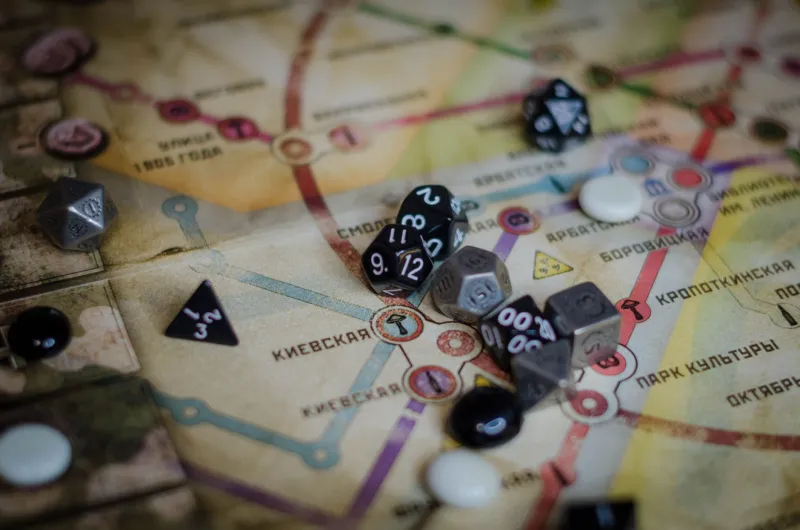
It usually happens around the third or fourth session of a campaign. Someone makes a split-second decision that recontextualizes everything. The table erupts. People are out of their chairs. The GM is scrambling to keep up with the avalanche of momentum, and somehow — somehow — every single element of the evening lines up like the universe itself decided to show up and run the session.
You talk about it for weeks. Maybe months.
And then, slowly, almost imperceptibly, that night stops being a fond memory and starts becoming a benchmark. A standard. A ghost that haunts every session that dares to be merely good.
This is the curse of the perfect session, and if you've been running or playing tabletop RPGs long enough, you've almost certainly felt it — even if you never had a name for it.
How the Curse Gets Cast
The mechanics of this are pretty straightforward when you lay them out. Human brains are wired to chase peak experiences. When something extraordinary happens at the table — a villain monologue that lands with surgical precision, a player character death that makes three grown adults cry into their character sheets — our brains log it as the target state. The new baseline. The thing we're supposed to be producing every single week.
The problem is that the perfect session almost never comes from planning. It comes from a collision of factors that nobody fully controlled: the mood in the room, a dice roll at exactly the right moment, a player who happened to be in the right headspace to take a narrative risk. You can't manufacture that. You can only create the conditions where it might happen.
But try telling that to your brain at 11 PM on a Thursday when you're staring at your prep notes thinking, this isn't going to be good enough.
The GM's Trap
For Game Masters, the curse tends to show up as over-preparation anxiety. You had one session where improvisation produced pure gold, so now you're terrified of improvising again — worried you've used up your luck. Or the opposite: you start over-scripting everything, trying to engineer the conditions that produced the magic last time, not realizing that the magic came from the looseness.
You start padding encounters with dramatic flair that doesn't quite fit. You drop callbacks to that legendary session that feel forced rather than resonant. You fish for the same emotional beats with different bait, and your players can feel the effort even when they can't name it.
There's also a subtler version of this trap: the GM who starts protecting the campaign's reputation. If your table has decided this is the best campaign you've ever run, you might find yourself making conservative narrative choices — avoiding risks that could undermine the story's standing. That's the curse working at its most insidious, because it's wearing the costume of good judgment.
What It Does to Players
Players aren't immune either. After a legendary session, some players become almost performatively engaged — trying to recreate the energy by cranking their roleplay up to eleven even when the scene doesn't call for it. Others go the opposite direction, pulling back out of an unconscious fear that anything they do will pale in comparison to that moment when their character's backstory paid off in the most spectacular way imaginable.
Group dynamics shift too. Tables that had one transcendent night together sometimes develop an unspoken collective pressure — a shared anxiety that surfaces as restlessness or distraction during sessions that are genuinely solid but not legendary. A good session gets graded as a disappointment not because anything went wrong, but because it didn't go transcendently right.
That's a miserable way to play a game you love.
Recognizing When You're Chasing the High
The first step is just being honest with yourself about what's happening. Some questions worth sitting with:
- Are you ending sessions feeling vaguely dissatisfied even when nothing actually went wrong?
- Is your prep time ballooning as you try to "improve" on your own recent work?
- Have you started referencing the legendary session out loud at the table, either directly or in the form of "remember when things were like this"?
- Are you or your players treating quiet, character-focused sessions as failures rather than essential texture?
If any of those land, you're probably under the curse. The good news is that recognizing it is most of the work.
Breaking the Spell
The most effective antidote to the perfect session curse is reframing what you're actually doing at the table. You're not producing a series of peak experiences. You're telling a story — and stories need contrast. The quiet chapter before the climax isn't a lesser chapter. It's load-bearing. It's what makes the climax hit.
A few practical moves that actually help:
Let the legendary session be complete. Don't treat it as a standard to clear — treat it as a gift the campaign gave itself at exactly the right moment. Acknowledge it, appreciate it, and then consciously release it from the role of measuring stick.
Deliberately run a low-stakes session. Plan an evening that's explicitly about character texture rather than dramatic momentum. A merchant road trip. A tavern night that goes sideways in small, funny ways. Give your table permission to exhale. You'll probably be surprised how much people enjoy it.
Talk about it openly. This one's underrated. Just naming the dynamic at your table — "hey, I think we've all been a little in our heads since that session" — takes most of its power away. Tables that can be honest about the meta-experience of playing together tend to be more resilient.
Let the next legendary session find you. The moments that end up in the hall of fame of your gaming history almost never came from trying. They came from showing up, doing the work, and being present enough to recognize the opening when it appeared. That's still your best strategy.
The Cauldron Keeps Brewing
Here at The Galaxy Cauldron, we talk a lot about forging worlds and building legends — and there's a reason we use that language. Legends aren't manufactured on demand. They're the byproduct of consistent craft, genuine investment, and enough trust in your collaborators to let the story be what it needs to be on any given night.
The perfect session wasn't the destination. It was a waypoint. One of many.
Your job isn't to recreate it. Your job is to keep showing up and building the kind of table where the next one has room to happen whenever it's ready.
And it will be ready. Just probably not on the night you're trying hardest to force it.