Reading the Room: What Your Players Are Telling You Without Saying a Word

Photo: Jules Verne Times Two, CC BY-SA 4.0, via Wikimedia Commons
You've spent three hours prepping this dungeon. The map is gorgeous. The villain's monologue is tight. The twist at the end? Chef's kiss. And then you look up mid-session and one player is scrolling their phone under the table, another is having a whispered side conversation about a completely unrelated TV show, and a third is nodding along to your description with the hollow eyes of someone who checked out twenty minutes ago.
Welcome to the hardest part of being a Game Master that nobody talks about enough: real-time table management.
Most GM advice focuses on what happens before the session — prep, planning, encounter balance. But the actual magic (or the actual disaster) happens in the moment, and the difference between a GM who's merely competent and one who's genuinely exceptional often comes down to one thing: the ability to read the room and adjust on the fly without the players ever realizing anything shifted.
The Signals You're Probably Missing
When you're deep in GM mode — tracking initiative, voicing three NPCs, secretly rolling perception checks — your attention is split a dozen ways. That's exactly when the subtle stuff slips past you.
Side conversations are the most obvious red flag, but they're easy to misread. A quick two-second exchange is normal. Five minutes of sustained chatter that nobody's trying to hide? That's your table telling you the current scene isn't holding them. The content doesn't matter as much as the duration and openness of it.
Phone checks are trickier. Players pull out their phones for all kinds of reasons — looking up a rule, checking a spell description, sending a quick text. But watch the body language. Are they leaning into the table or away from it? Someone hunched over a phone with their shoulders turned slightly toward the door is mentally already somewhere else.
Glazed expressions are the quietest alarm bell of all. There's a specific kind of nodding that players do when they're not actually processing what you're saying — slow, rhythmic, eyes slightly unfocused. It looks like engagement. It isn't. If you notice two or more players doing this simultaneously, whatever you're currently doing has gone on too long.
Then there's the opposite problem: the tense, too-still silence. Not every quiet moment at the table is disengagement. Some silences are genuinely electric — players leaning forward, exchanging glances, visibly thinking hard. Learning to tell the difference between bored silence and invested silence is one of the most valuable instincts you can develop.
Confusion vs. Hesitation — They Look Almost Identical
Here's a scenario: you've just described a complex political situation involving three factions, and your players have gone quiet. Are they confused? Are they strategizing? Are they roleplaying characters who would genuinely be uncertain? Or are they just waiting for someone else to go first?
The tell is usually in the eyes. Confused players tend to glance at each other — not to communicate, but almost like they're checking whether anyone else understood. Strategizing players look down or inward, processing. Hesitant roleplayers often look at you, waiting for a social cue that it's okay to act.
A simple, low-stakes prompt can break the ambiguity without breaking immersion. Something like "What's going through your character's head right now?" directed at one specific player does two things: it re-engages whoever you ask, and it signals to the table that action is expected. You don't need to stop and explain anything. Just redirect the energy.
If the confusion is genuine — if you get blank stares and halting responses that suggest nobody actually understood the setup — don't be afraid to have an NPC naturally summarize the situation in-world. "So just to confirm we're all on the same page, what you're saying is..." is a line any character can deliver, and it lets you clarify without anyone feeling called out.
Adjusting Without Stopping the Clock
The amateur move when you sense a session drifting is to pause and address it directly. "Hey, is everyone still having fun? Should we change things up?" Sometimes that's necessary. But more often, it punctures the atmosphere and makes everyone self-conscious.
The pro move is subtler. You have a few tools that work in real time:
Inject a sharp sensory detail. When attention drifts, the fastest way to pull it back is to say something unexpected and visceral. The sound of something heavy being dragged across stone in the corridor above. The smell of smoke when there shouldn't be any. A detail that doesn't fit and demands interpretation. Curiosity is the best re-engagement tool you have.
Give someone something specific to do. Passive players are usually bored players. If someone's been quiet for a while, don't wait for them to volunteer — give their character a direct prompt. A guard looks specifically at them. A letter is addressed to their character. Suddenly they have to engage.
Accelerate. If a scene is dragging, cut it short. You don't need to explain why. Just move the story forward. "After another hour of searching, you find nothing more of value — but as you prepare to leave, you hear voices outside the door." Done. Momentum restored.
Slow down. The inverse is also true. If players are rushing through content you can tell they're genuinely enjoying, pump the brakes. Add texture. Let them sit in the moment. Not every session needs to be a sprint.
Energy Management Is a Real Thing
Sessions have a natural rhythm, and ignoring it is a fast track to everyone leaving the table feeling vaguely unsatisfied even if nothing obviously went wrong.
Most groups can sustain intense, high-focus scenes for about 20 to 30 minutes before needing a release valve — a moment of humor, a quieter interaction, something that lets people breathe. If you're chaining intense encounters or emotionally heavy scenes back to back without relief, you're going to see attention start to fragment even from your most invested players. That's not weakness on their part. That's just how human attention works.
Watch for the joke. When players start making meta-jokes or goofy in-character comments during a scene that's supposed to be tense, that's usually a signal that the tension has been running too hot for too long. Don't shut it down — lean into it briefly, let the table laugh, then redirect. The session will be better for it.
The Bigger Picture
All of this comes back to one core truth: you are not just a storyteller. You're a host. The world you've built, the lore you've crafted, the encounters you've designed — none of it matters if the people sitting across from you aren't having a good time in their actual physical bodies in the actual current moment.
The most immersive campaign setting in the history of tabletop gaming can't survive a table that's checked out. But a GM who's paying attention — who catches the drift before it becomes a current, who adjusts before anyone notices there was ever a problem — can turn a mediocre session into a memorable one just by staying present.
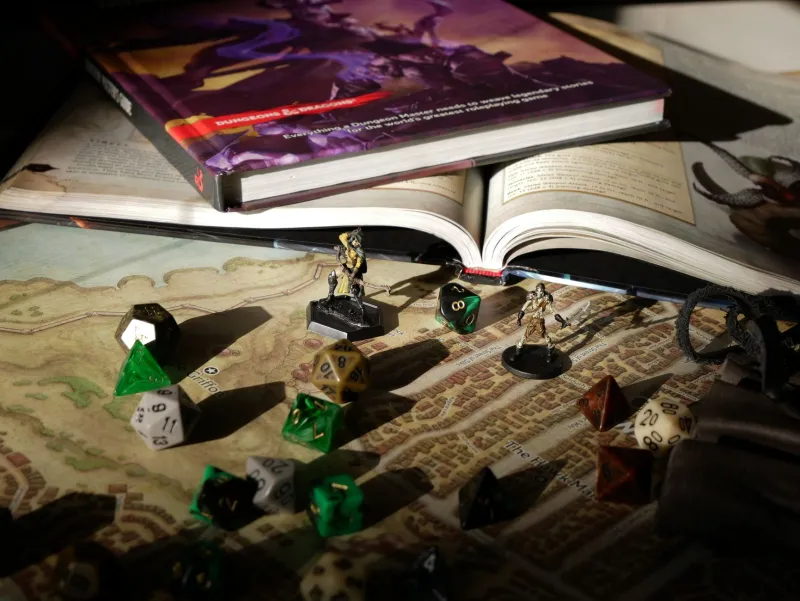
Your dice, your notes, your maps: those are tools. The table itself? That's the game.