Your Loot Table Is Lying to You: The Real Reason Players Don't Care About Treasure
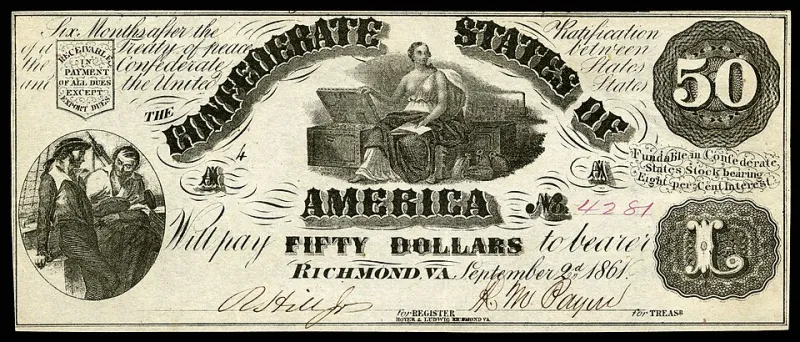
Photo: National Museum of American History, Public domain, via Wikimedia Commons
Opinion piece incoming, and I'm not walking it back: the average GM spends way too much time worrying about treasure balance and almost no time thinking about treasure meaning. We stress over whether the party has too many attunement slots filled, whether the gold economy makes sense, whether that +2 sword is too powerful for this tier of play. Meanwhile, our players are selling everything that isn't nailed down and forgetting what they found two sessions later.
That's not a balance problem. That's a storytelling problem.
The Dragon Hoard Fallacy
Here's the scenario: your players just defeated a massive red dragon. They descend into the hoard. You describe mountains of gold coins, gemstones, ancient armor, piles of magical trinkets. The players' eyes light up — for about four minutes. Then someone asks what the exchange rate is for platinum, someone else checks whether any of the magic items are better than what they already have, and the whole thing gets converted into numbers on a sheet.
Why? Because none of that treasure meant anything. It was scenery dressed up as reward.
The gold total doesn't matter. The rarity tag on the magic weapon doesn't matter. What matters is the answer to one question that most GMs never ask when they're designing loot: why would a player character care about this specific object?
If you can't answer that, you've got furniture. And furniture gets sold.
What Actually Creates Attachment
Let me give you a counterexample. In a long-running campaign I heard about through our forums, a player's ranger found a battered hunting knife in a bandit camp — mechanically a plain dagger, no bonuses, no special properties. Completely unremarkable by any loot table standard. But the GM had seeded the detail that the knife's handle was carved with the same regional pattern as the ranger's destroyed hometown.
That knife never left that character's inventory. It survived three years of campaign play and multiple equipment upgrades. The player talked about it in their final session recap like it was the most important thing their character owned.
No magic. No stats. Just a story hook small enough to feel personal.
This is the core principle: attachment comes from narrative investment, not mechanical value. Players care about objects that connect to something they already care about — their character's history, an NPC they love, a conflict that's been building for sessions, a mystery they're trying to solve.
The Three Levers That Actually Work
If you want to design treasure that players remember, you've got three reliable tools in your kit.
History and provenance. Where did this thing come from, and does that origin intersect with anything the players already know? A sword that belonged to a legendary figure is interesting. A sword that belonged to the father of an NPC the party has been traveling with for ten sessions is unforgettable. The difference is personal relevance. Before you place any significant item in your world, ask yourself: whose hands has this passed through, and do any of those names mean something to someone at the table?
Moral weight. Some of the best treasure is treasure that comes with a cost. A powerful magic ring that the players know was stolen from a grieving widow. A spellbook that clearly belonged to someone who didn't give it up willingly. These objects create ongoing narrative tension. Every time a player uses that ring, there's a question hanging over the table. That's engagement you can't buy with a +3 enchantment.
Unfinished business. Items that open doors rather than close them are worth their weight in platinum. A partial map. A locked box with no key. A letter written in a language nobody can read yet. These aren't frustrating if they're handled well — they're hooks that players carry willingly because they want to know the answer. The treasure becomes a story engine rather than a transaction.
A Quick Framework Adjustment for Your Next Session
You don't have to overhaul your entire campaign to start applying this. Here's a simple habit that pays off fast:
For every significant loot drop you're planning, write one sentence that answers: why does this object have a past? Just one sentence. "This shield was carried by a soldier who survived the siege your party's fighter grew up hearing about." That's enough. The player will do the rest of the emotional work for you.
For random loot that genuinely doesn't need narrative weight — the consumables, the spare equipment, the bulk gold — stop pretending it's exciting. Just describe it quickly and move on. Players have great instincts for when a GM is trying to make something feel significant that isn't. Respecting that instinct by not over-describing filler loot actually makes your meaningful items land harder by contrast.
The Items That Become Campaign Legends
Every long-running campaign ends up with a handful of items that transcend their stat blocks. The rusty key that opened the vault where everything changed. The broken compass that still pointed somewhere specific. The coin a dying NPC pressed into a character's hand with their last breath.
None of those are famous because they were mechanically powerful. They're famous because they were present for something that mattered.
That's what you're building toward when you design treasure with intention. Not a balanced economy. Not a satisfying magic item progression curve. A collection of objects that, by the end of the campaign, tell the story of what happened at your table.
So yeah — your dragon hoard doesn't matter. The story you hide inside it does. Start there.