Table for One: Your Complete Guide to Solo RPG Campaigns That Actually Deliver
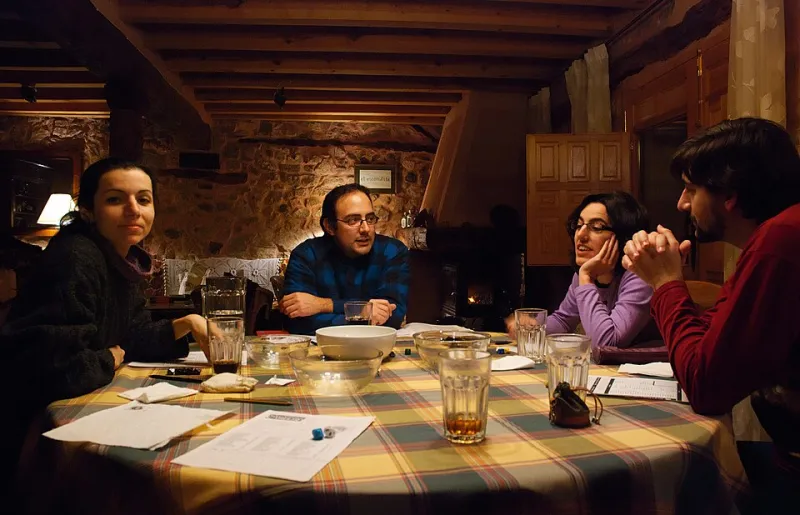
Photo: Diacritica, CC BY-SA 3.0, via Wikimedia Commons
Let's be real about something: adulting absolutely destroys gaming groups.
It starts gradually. Someone moves across the country for a job. Another person has a kid. A third gets a shift schedule that makes Thursday nights impossible. Before long, that tight-knit campaign crew that used to meet every week is reduced to a group chat that occasionally surfaces to say "we should really get back to that campaign" before going quiet for another two months.
If this sounds familiar, you're in good company. And here's the thing — you don't have to wait for everyone's calendars to align before you get to play.
Solo tabletop RPG gaming has grown from a niche workaround into a genuinely thriving corner of the hobby, complete with dedicated systems, community tools, and creative techniques that make flying solo not just workable, but legitimately excellent. Here's what you need to know to get started.
Why Solo Play Is Having a Moment
The pandemic accelerated a lot of trends in tabletop gaming, and solo play was one of them. When group sessions became impossible, players started looking for ways to scratch the RPG itch on their own terms. What they found was a surprisingly robust ecosystem that had been quietly developing for years.
Solo play also appeals to a specific type of gamer: the worldbuilder and lore-obsessive who wants to explore a setting deeply without having to herd four other people through it. If you've ever wanted to spend three sessions just mapping a city and developing its political factions without anyone asking when the combat starts, solo campaigns are your dream scenario.
The Oracle Problem (And How to Solve It)
The biggest mechanical challenge in solo play is obvious: who's the DM?
Traditional tabletop RPGs are built around a Game Master who responds to player decisions, introduces complications, and keeps the story moving in unexpected directions. Playing solo means you need a system that can generate those surprises without you just... deciding what happens next and removing all tension.
This is where oracle systems come in, and they're genuinely clever. An oracle is a randomization mechanic — usually a table, a deck of cards, or a set of dice prompts — that answers yes/no questions with varying degrees of probability. Ask the oracle "Is the guard captain corrupt?" and it might come back "Yes, and there's a complication." Suddenly you're not writing your own story; you're discovering it.
The most popular dedicated solo RPG engine right now is Ironsworn by Shawn Tomkin, which is free on itch.io and has built-in oracle tables, a vow-based progression system, and a dark fantasy setting that rewards slow, deliberate storytelling. Its sci-fi sibling, Starforged, does the same thing in a space exploration context. Both are genuinely excellent entry points.
For players who want to adapt their existing favorite systems, MÖRK BORG has solo supplements, and Mythic Game Master Emulator (now in its second edition) works as an overlay on almost any system you already own, including D&D 5e.
Journaling: The Secret Weapon of Solo Campaigns
One of the most effective techniques in solo play is keeping a campaign journal, and it does something unexpected — it makes the whole experience feel more real.
When you write down what your character did, what they discovered, and what they're feeling about it, you create a record that starts to feel like a living story rather than a series of solo dice rolls. A lot of solo players find that the journaling component becomes their favorite part of the session.
You don't have to be a great writer for this to work. Even rough, present-tense notes — "Kael finds the burned village. Three survivors. One of them recognizes his armor. Bad sign." — create narrative momentum that carries you through the next session.
There are also systems built specifically around this format. Ironsworn lends itself naturally to journaling, and games like Thousand Year Old Vampire are structured almost entirely as guided journaling exercises with dice-driven prompts. The latter is one of the most emotionally affecting solo RPG experiences available right now, full stop.
Tools That Make Solo Play Easier
Beyond the core systems, a few tools are worth knowing about:
Mythic GME 2e — Already mentioned, but worth emphasizing. If you want to run solo D&D or Pathfinder, this is your best friend. It adds chaos factors, scene alteration mechanics, and robust oracle tables that genuinely surprise you.
Scarlet Heroes — A free OSR-style game designed specifically for one-player, one-GM or fully solo play, with built-in dungeon and wilderness generation tables.
The GameMaster's Apprentice cards — A physical card deck that works as a portable oracle system. Useful if you prefer analog tools over apps or PDFs.
AI-assisted play — This one's worth mentioning carefully. Some solo players use AI chatbots as a kind of improvisational GM, throwing scenarios at them and using the responses as springboards. Results are inconsistent, but as a brainstorming or "yes, and" tool during a session, it can help break creative logjams.
What Solo Play Can't Do (And Why That's Okay)
Let's be honest: solo campaigns are different from group play, not a replacement for it. The chaotic energy of four people making terrible decisions together, the in-jokes, the shared "oh no" moments — that stuff only exists at a full table.
But solo play offers something group campaigns rarely can: total narrative control, complete flexibility in pacing, and the ability to go as deep into lore and character psychology as you want without anyone tapping their fingers waiting for combat.
For the worldbuilders, the lore-heads, the players who have seventeen pages of backstory that never actually came up at the table — solo RPGs are basically made for you.
Getting Started This Weekend
If you want to jump in without overthinking it, here's the simplest path: download Ironsworn for free, read the first fifty pages, and start a character. Pick a vow. Roll on the oracle when you have a question about the world. Write two sentences about what happened after each roll.
That's it. That's the whole thing.
The galaxy of solo RPG tools is deep and genuinely exciting right now, but you don't need to master all of it before your first session. You just need a character, a question, and somewhere to write down what happens next.
Your group might get back together someday. Or they might not. Either way, the story doesn't have to wait.