When Your Players Torch the Map: Embracing the Beautiful Chaos of Campaign Derailment

Photo: U.S. Air Force photo by Senior Airman Sarah Spadie, Public domain, via Wikimedia Commons
You spent three weeks building a political conspiracy that would span an entire campaign arc. You had NPCs with backstories, a villain with genuine motivations, and a breadcrumb trail of clues so elegant it would make Agatha Christie weep. Then your players decided to befriend the villain's horse and accidentally started a livestock rebellion. Sound familiar?
Welcome to the Galaxy Cauldron, friend. Pull up a chair. We need to talk about the most frustrating and most magical thing that happens at every great tabletop RPG table: the moment your players completely blow up everything you planned, and it turns out to be the best session you've ever run.
The Illusion of the Perfect Plan
Every dungeon master, game master, or storyteller of any flavor has felt it — that particular brand of pre-session confidence where you genuinely believe this week's session is going to go exactly as designed. The players will follow the hooks. They'll walk into the tavern, hear the rumors, and ride north toward the ancient ruins like sensible adventurers.
They will not. They never do. And here's the thing nobody tells you when you're starting out: that's the entire point.
Tabletop RPGs are fundamentally different from video games, novels, or films because the story isn't authored — it's negotiated in real time between the GM and a group of players who have their own ideas, their own agendas, and a truly alarming willingness to ask questions about background NPCs you invented on the spot five minutes ago. The moment your players start treating that throwaway blacksmith as a potential party member is the moment your campaign stops being your story and becomes everyone's story.
That transition is where the magic lives.
Real Stories from the Cauldron Community
We put out a call to our community asking for their best "players broke everything and it ruled" moments, and the responses were genuinely spectacular.
Forum member AxeAndAnchor_DM described a campaign where the party was supposed to infiltrate a corrupt merchant guild. Instead, three sessions in, the rogue had married into the guild family, the paladin had accidentally been elected to a local city council seat, and the wizard had started a competing business. "I threw out my entire outline," they wrote, "and we ended up running a year-long campaign about municipal politics and family drama that my players still talk about five years later."
SerpentThrone_Tabitha shared a D&D 5e story where the players were supposed to stop a necromancer from opening a portal to the shadowfell. Instead, they negotiated a peace treaty with the necromancer, adopted three undead NPCs as party mascots, and spent the final arc trying to get those undead legally recognized as citizens. "I cried laughing at the table," she said. "And honestly? The themes of personhood and belonging that came out of that were way more interesting than anything I'd planned."
These aren't exceptions. They're the rule. The campaigns that become legends in your friend group almost never go according to plan.
Why Player Agency Breaks Stories (In the Best Way)
Here's the framework worth internalizing: your prep isn't a script, it's a pressure system. You're building tension, establishing factions, seeding consequences — and then releasing your players into that system to see what explodes.
When players make unexpected choices, they're not breaking your story. They're revealing what your world would actually do in response to real, unpredictable human beings. That's not a flaw in the collaborative storytelling process. That's the entire feature set.
Think about it from a pure narrative standpoint. The most memorable stories — the ones that get retold at conventions, posted in forum threads, turned into actual play podcasts — almost always involve a moment where something went sideways. Where a player made a choice nobody saw coming and the table collectively held its breath waiting to see what happened next. That spontaneous, unscripted tension is something no authored medium can replicate.
Practical Tools for Riding the Wave
Embracing chaos doesn't mean abandoning prep — it means prepping differently. A few frameworks that veteran GMs swear by:
Prep situations, not plots. Instead of planning "the players will discover the mayor is corrupt and confront him at the gala," prep the mayor as a fully realized character with goals and fears, prep the gala as a location with interesting moving parts, and prep three or four factions with competing interests. Then let the players walk in and see what catches fire.
Keep a "yes, and" folder. When players invent something unexpected — a backstory detail, an off-the-cuff alliance, a random NPC they've decided is important — write it down immediately and find a way to make it matter later. Nothing communicates that the world is alive like the game remembering something a player said in session two and paying it off in session twelve.
Let failure be interesting, not punishing. Some GMs panic when players derail a carefully planned arc and try to railroad them back on track. Resist that instinct hard. Instead, ask yourself: what would logically happen in this world given what the players just did? Follow that thread. It almost always leads somewhere more interesting than where you were originally headed.
Steal from improv comedy. The "yes, and" principle isn't just a cliché — it's the load-bearing wall of collaborative storytelling. When a player does something unexpected, your first instinct should be to find a way to make it work, not to find a reason to shut it down.
The Multiverse Is the Point
Here's the philosophical truth at the center of all of this: your campaign setting is a multiverse of potential stories, and your players are the observers that collapse those possibilities into one specific, unrepeatable reality. Every session, you're collectively deciding which version of your world exists.
That's not a bug in the system. That's the whole reason tabletop RPGs have survived and thrived for fifty years while other entertainment formats have come and gone. You can't get this experience anywhere else. No video game, no matter how sophisticated, can fully account for the beautiful, chaotic, deeply human choices that real players make at a real table.
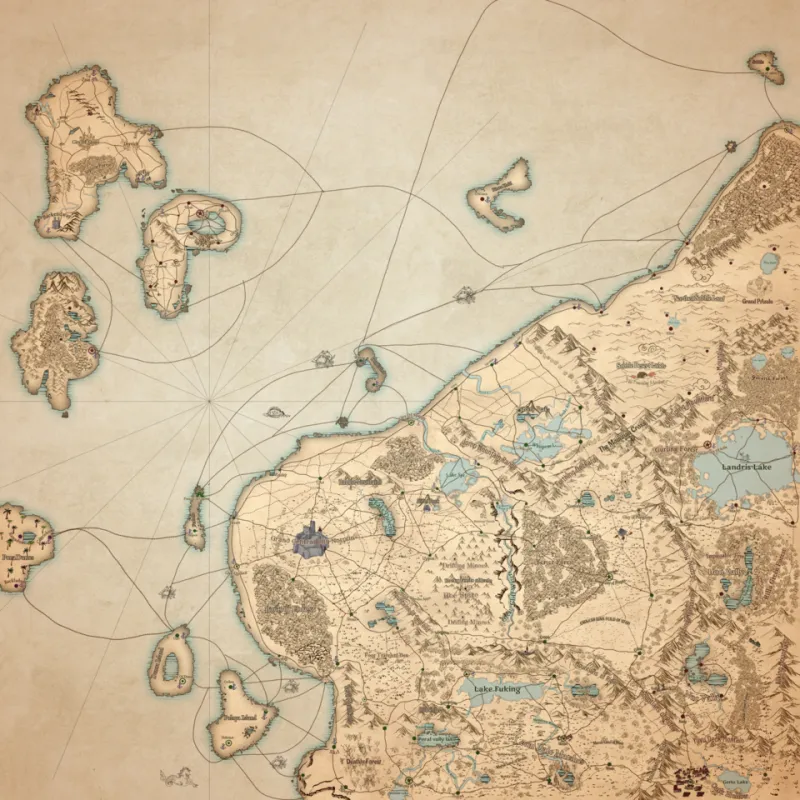
So next time your players torch your carefully constructed map — and they will — take a breath, pick up the narrative thread they've handed you, and follow it. Somewhere in the wreckage of your original plan, there's a better story waiting to be told.
The Galaxy Cauldron didn't get its name from things going smoothly. It got its name from throwing everything in the pot and seeing what comes out bubbling.
What's the most spectacular campaign derailment you've ever experienced? Drop it in the comments — we're building a collection of the best chaos stories from the community.