Character Drift: When the Hero You Loved Becomes the Problem Nobody Wants to Name
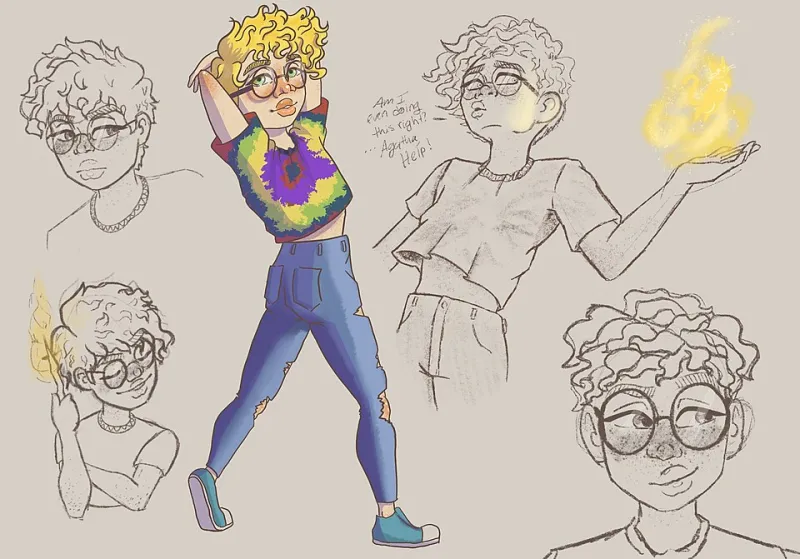
Photo: ViCee25, CC BY-SA 4.0, via Wikimedia Commons
There's a specific kind of dread that settles over a GM around session thirty or forty of a long campaign. It's not the dread of a poorly planned dungeon or a player who keeps checking their phone. It's quieter than that. It creeps in when you realize the character sheet sitting across the table from you has become something you no longer fully recognize — and that everyone at the table has noticed, and nobody has said a single word about it.
This is character drift. And it's one of the most common, least-discussed sources of tension in long-form tabletop campaigns.
How a Beloved PC Slowly Becomes a Structural Problem
It rarely happens all at once. Nobody sits down one Tuesday night and decides to break the table's social contract. What actually happens is incremental. A player takes a feat that makes perfect narrative sense at level six. Then a multiclass dip that felt organic to their character's arc. Then a magic item that seemed like a reasonable reward. Then another feat. Then a subclass ability that interacts with the first feat in a way nobody anticipated.
By the time you're looking at the full picture, the character isn't just powerful — they've become a kind of gravitational center that pulls every encounter, every social interaction, and every loot decision into their orbit. Other players start building their characters around what this one can't do rather than what their own characters genuinely want to be. Encounters get quietly rebalanced by the GM to account for one player's output. And the original fiction of who this character was — that scrappy rogue, that reluctant paladin, that wide-eyed wizard — has been quietly buried under fifteen levels of mechanical optimization.
The tragedy is that the player who built this character often loves them the most. They've invested real emotional energy into that character's story. The last thing anyone wants to do is tell them something has gone sideways.
The Silence That Makes It Worse
Here's the uncomfortable truth: the longer a table waits to address character drift, the harder the conversation becomes. Every session that passes without acknowledgment is an implicit endorsement of the current state. Players reasonably interpret silence as approval. The GM who quietly nerfs encounters to compensate has now made themselves complicit. The other players who've started optimizing around the problem have reinforced it structurally.
And underneath all of that, there's a social dynamic that's genuinely tricky to navigate in a hobby built on collaborative trust. Tabletop RPGs aren't just games — they're relationships. Telling someone their character has become a problem feels personal in a way that calling out a rules misread simply doesn't.
But here's the thing: the silence isn't protecting anyone. It's just delaying a conversation that will eventually happen anyway, usually at the worst possible moment, when frustration has been building long enough that it comes out sideways.
What Character Drift Actually Looks Like at the Table
Before you can address it, it helps to name the specific symptoms. Character drift tends to manifest in a few recognizable patterns:
The Spotlight Vacuum. One character's action economy, utility, or raw output is so dominant that other players spend most of a session watching rather than participating. Combat rounds feel like a formality. Social encounters get routed through the one character with maxed Persuasion and Expertise.
The Lore Disconnect. The mechanical version of the character has outgrown the fictional version. A character who was established as a street-level thief is now teleporting across battlefields and shrugging off dragon breath. The narrative logic that made them compelling has quietly been abandoned in favor of whatever the next build milestone unlocked.
The Expectation Creep. The table has unconsciously restructured its expectations around one character's capabilities. Puzzles, encounters, and story beats are designed — by the GM and sometimes by other players — to route through that character's skill set. The world has bent to accommodate them, and it shows.
The Unspoken Resentment. This is the dangerous one. Other players have started making comments that are technically jokes but carry a real edge. The GM has started dreading the moments when that character engages. Nobody names it. Everyone feels it.
Having the Conversation Without Torching the Table
The good news is that character drift is almost always fixable if it's addressed before it becomes a grievance. The key is framing the conversation as a creative problem rather than a personal criticism.
Start outside the session. Never bring this up mid-game, mid-combat, or in a moment of obvious frustration. A private conversation — or a small group check-in before the next session — creates space for honesty without the pressure of an audience.
Focus on the fiction first. Instead of leading with "your character is too powerful," try "I want to talk about where [character name] is headed narratively, because I think there's a really interesting story here that we might be missing." Mechanical concerns are easier to address once the fictional frame is reestablished.
Bring the player into the solution. The worst outcome is a player who feels like something was done to their character. The best outcome is a player who feels like they helped redesign their own arc. Ask them what they want for the character going forward. Often, players who've drifted into mechanical bloat are themselves a little lost about who their character is supposed to be at this point.
And if multiclassing or feat stacking is the core mechanical issue, most systems have built-in tools for retroactive adjustment — a story beat that changes the character's access to certain abilities, a moment of consequence that reframes their power level within the fiction. It doesn't have to feel like a rules correction. It can feel like character development.
The Character Sheet Is a Living Document, Not a Permanent Record
The deeper issue that character drift exposes is a common misconception about what a character sheet actually is. A lot of players — especially newer ones — treat it as a ledger. Every ability earned is permanent. Every choice made is locked. The character is the sum of their mechanical parts, and those parts don't get revisited.
But the most memorable characters in any long campaign aren't the ones who accumulated the most features. They're the ones whose growth felt coherent, whose power felt earned within the story, and whose limitations made them interesting. A character who can do everything isn't a protagonist — they're a plot device.
The galaxy of stories your table is trying to forge together works best when every character at the table has room to matter. That's not a mechanical argument. It's a storytelling one. And it's worth having the conversation to protect it.
Your table built something together. It's worth a little discomfort to keep it worth showing up for.